

Add Row
Add Element
affiliate success stories hub favicon image
update
Affiliate Success Stories Hub
update
Add Element
  • Home
  • Categories
    • Success Stories
    • Marketing Tips
    • Strategy Insights
    • Expert Interviews
    • Case Studies
    • Tools & Resources
    • Industry News
May 17.2025
2 Minutes Read

Eugene Daniels Inspires Class of 2025 to Conquer Imposter Syndrome

Well-dressed man in studio, pondering, Eugene Daniels and Imposter Syndrome.


Embracing Authenticity: Eugene Daniels' Inspiring Speech

In a heartfelt commencement address to Colorado State University's Class of 2025, MSNBC host Eugene Daniels shared valuable insights drawn from his journey, highlighting one of the most pervasive challenges many young professionals face today: imposter syndrome.


This condition, marked by persistent doubts about one’s abilities, often surfaces especially when entering high-stakes environments. Daniels' reflections remind graduates that embracing their true selves is essential in overcoming such obstacles.


The Journey from Graduation to National Spotlight

Since graduating with a degree in journalism in 2012, Daniels has navigated a challenging yet rich career path, including significant roles at Politico and as president of the White House Correspondents’ Association.
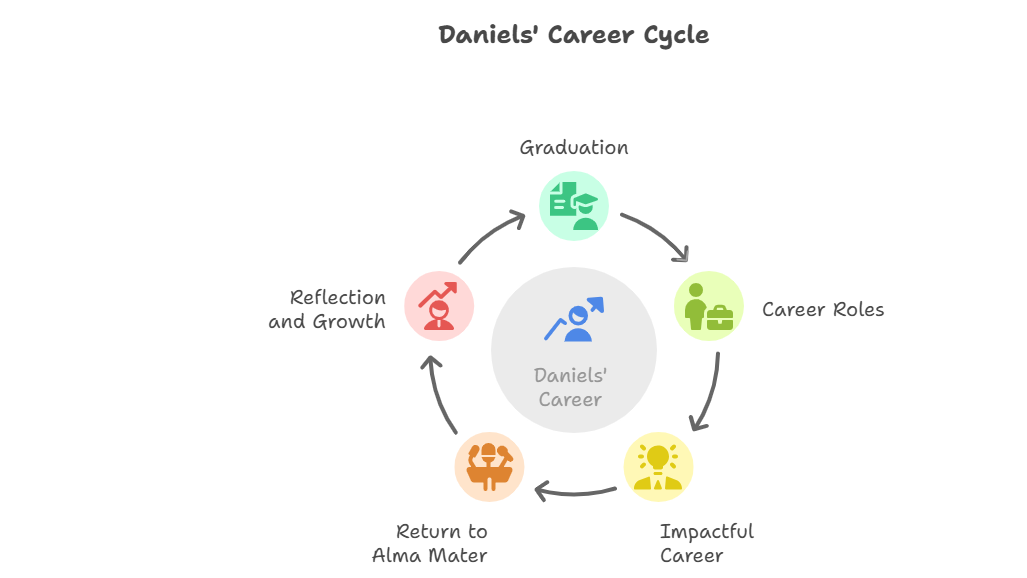

Circular diagram titled 'Daniels' Career Cycle' with stages: Graduation, Career Roles, Impactful Career, Return to Alma Mater, and Reflection and Growth, surrounding a central icon labeled 'Daniels' Career


His ascent illustrates the long and often non-linear journey many alumni experience as they seek impactful careers. His return to address the graduating class in 2025 serves as a powerful reminder of the cycles of learning and growth that define both personal and professional identities.


Confronting Imposter Syndrome

Central to Daniels' message was the notion that self-doubt is a natural yet conquerable barrier. "Imposter syndrome is real and that little monster is always ready to rear his nasty little head," he articulated, creating a connection with graduates who may feel overwhelmed as they enter the professional world.


By sharing his experiences, he provided a humanizing glimpse into the often glamorized world of politics and media, effectively reassuring graduates that they belong in any room they enter.


Lessons on Resilience and Self-Acceptance

Daniels encouraged the graduates to accept all of their unique traits and quirks, framing these as strengths rather than weaknesses.
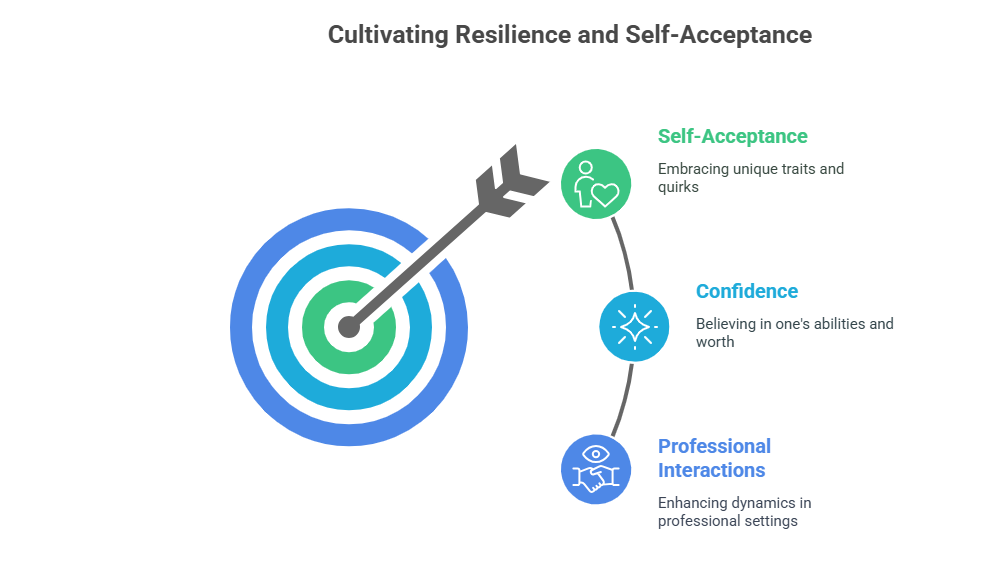

Diagram titled 'Cultivating Resilience and Self-Acceptance' with three sections: Self-Acceptance—embracing unique traits and quirks, Confidence—believing in one's abilities and worth, and Professional Interactions—enhancing dynamics in professional settings


"When you start spending time with leaders or decision makers, you will expect the conversation to be above your head... but it’s not," he said, driving home the importance of confidence in every setting.


By cultivating self-acceptance, graduates can fundamentally alter the dynamics of their professional interactions.


Inspiring the Next Generation of Leaders

For a new generation stepping into a complex and evolving job market, Daniels' insights are timely. He challenged the graduates not only to succeed but to remain true to themselves as they pursue their dreams.


His words serve as a beacon of inspiration, illustrating that the unique voice each graduate brings to the table is invaluable in shaping their fields.


Success Stories

8 Views

0 Comments

Write A Comment

*
*
Related Posts All Posts
02.21.2026

How DEPT's AI-Enhanced Studio Will Transform Global Content Creation

Update Revolutionizing Content Creation: The DEPT and Adobe Collaboration In an era where digital marketing strategies are increasingly complex and demanding, DEPT is redefining how content is created with its newly revamped DEPT Studios. This transformation integrates Adobe’s cutting-edge software, including GenStudio and Workfront, laying the groundwork for an enhanced global content studio capable of producing high-quality marketing materials swiftly and efficiently. Meeting the Growing Demand for Diverse Content As consumer attention continues to fragment across platforms and languages, brands are faced with escalating content demands. DEPT's strategic overhaul is designed precisely to address this need, empowering teams to generate tailored content that resonates with multilingual audiences. By leveraging automated processes through Adobe’s AI tools, DEPT promises greater efficiency in production without sacrificing quality. Harnessing AI to Streamline Content Workflows The introduction of AI technologies in content creation is not just a trend; it’s a critical shift towards scalability and speed. With the integration of AI-powered tools, DEPT Studios aims to minimize redundancies and streamline workflows. This is echoed in insights from industry experts who emphasize that AI should not merely be a tool for content generation but a strategic ally in navigating complex marketing landscapes. The potential for faster turnaround times, while enhancing audience engagement, sets a high bar for competitor agencies. The Importance of Quality Over Quantity While many agencies are rushing to implement AI without a strategic framework, DEPT is keenly aware that quantity does not equate to quality. As Lisa Peyton articulated, understanding the audience and ensuring high-quality content remains paramount. DEPT’s focus on integrating proprietary systems, such as its Lightspeed engine, carries the dual benefit of automating mundane tasks while allowing creative talents to focus on high-value, strategic endeavors. Diverse Perspectives: A Multipronged Approach The call for a deeper understanding of audience preferences and market trends is more relevant than ever. As brands look to expand their reach, DEPT’s comprehensive strategy—harnessing AI for strategic insights, quality assurance, and tailored content—positions them favorably within the industry landscape. This multifaceted approach facilitates a dynamic content creation environment that not only responds to market demands but anticipates them. As DEPT Studios embarks on this path, it illustrates the transformative power of technology in marketing. The future of content creation hinges on adaptability and a firm commitment to quality, ensuring that brands can thrive amid an ever-evolving digital landscape.

02.19.2026

ChatGPT Ads: How Big Brands Are Shaping AI's Advertising Future

Update How Advertising is Evolving Inside ChatGPTOpenAI has taken a bold step into monetization by beginning to show ads within its popular AI platform, ChatGPT. This new approach marks a significant shift from its previous aversion to advertising, and brands like Best Buy, Expedia, and Qualcomm are among the first to pilot these ads. According to reports, these advertisements are designed to be relevant and non-intrusive, providing users with helpful suggestions based on their prompts.Why Brands are Excited About ChatGPT AdvertisingAsad Awan, OpenAI's ads and monetization lead, shares that this advertising venture embraces brands that align with the user experience. Highlighting significant investments from advertising giants like Omnicom, WPP, and Dentsu, it's clear that major players see value in this developing format. The notion is to craft a deeply integrated marketing approach that seamlessly melds with the AI chatbot's function, thereby potentially enriching user engagement.Scarcity and Class in AdvertisingAdthena's analysis reveals that ads currently show up in only about 0.8% of ChatGPT responses. This limited placement strategy is deliberate; OpenAI appears to be testing the waters cautiously, focusing on a select group of brands. Such a curated approach not only maintains user trust but could shape a new advertising ecosystem where ads are perceived as a beneficial extension of user interactions.The Future of AI Monetization StrategiesThe implications of these early tests might signal a broader trend in AI revenue generation. With OpenAI aiming to surpass its subscription model, the introduction of ads could pave the way for other tech companies to explore similar pathways. As AI technologies continue evolving, understanding the balance between advertisement presence and user experience will be pivotal.Emotional Reactions: What Users Might FeelFor the average ChatGPT user, seeing ads incorporated into conversations may evoke mixed feelings. While some may welcome personalized offerings based on their prompts, others might be suspicious about privacy or the authenticity of responses. Addressing these concerns through transparency and not compromising user trust will be crucial as OpenAI navigates this new frontier.

02.18.2026

Why Taylor Swift’s Trademark Moves Are A Lesson in Brand Protection

Update How Taylor Swift's Trademark Strategy Redefines Brand Protection Taylor Swift's approach to intellectual property (IP) management isn't just a case study in legal prowess; it's a masterclass in modern brand positioning. Recently, Cathay Home found itself in hot water for its "Swift Home" bedding line, prompting Swift's management to file a formal opposition citing trademark infringement. Why is this significant? Swift has filed over 300 trademark applications in the U.S. alone, demonstrating a keen understanding of brand protection and market presence that goes beyond music. The Power of Preemptive Action Swift's legal team operates with a strategy of preemptive action. They file trademarks long before any public announcements, securing her name and brand across various product categories. This means that when she recently announced her new album, her team had prepped trademark filings for related names and logos hours in advance. By the time information is publicly available, Swift already controls the rights to those terms—creating a strong defensive perimeter that deters potential infringements. The Ripple Effect of Enforcement The effectiveness of Swift's strategy lies in its visibility. With consistent enforcement against even smaller entities—like a fantasy park that borrowed the name of her album—she demonstrates that trademark violations won't go unchallenged. This not only protects her current assets but also serves as a warning to others. By making examples of both large and small infringers, Swift is not just defending her brand; she’s creating a chilling effect that discourages others from stepping into the legal grey areas. Lessons for Everyday Brands What can everyday brands learn from Swift's approach? The key takeaway is that preemptive brand protection can be a significant competitive advantage. All brands, regardless of size, should consider filing for trademarks in their industry, especially when launching new products. It’s not just about ownership; it’s about creating a legacy that lasts.

Terms of Service

Privacy Policy

Core Modal Title

Sorry, no results found

You Might Find These Articles Interesting

T
Please Check Your Email
We Will Be Following Up Shortly
*
*
*